
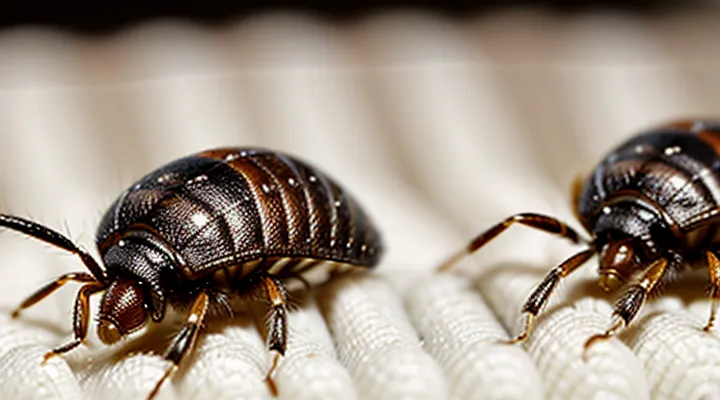
The Life Cycle of a Bed Bug
From Egg to Nymph
The Egg Stage
Bed bug reproduction begins with the deposition of eggs by the fertilized female. After a blood meal, the female seeks concealed sites—seams of mattresses, cracks in furniture, or wall voids—and inserts each egg with a specialized ovipositor. A single female can lay 5 – 7 eggs per day, reaching up to 200 eggs over her lifespan.
Eggs measure approximately 1 mm in length, appear white or pale yellow, and are encased in a thin, translucent chorion that protects the embryo while allowing gas exchange. The chorion adheres to the substrate, reducing the risk of displacement.
Incubation depends on ambient temperature. At 24 °C (75 °F) embryos hatch within 6 – 10 days; lower temperatures prolong development, while temperatures above 30 °C (86 °F) accelerate hatching but may increase mortality. Relative humidity between 70 % and 80 % optimizes embryonic survival.
Key environmental factors influencing egg viability:
- Stable temperature within the optimal range
- Consistent high humidity
- Absence of mechanical disturbance or chemical exposure
When conditions remain favorable, the majority of eggs hatch into first‑instar nymphs, completing the initial phase of the bed bug life cycle.
Nymphal Instars and Molting
Bedbugs hatch from eggs as tiny, wing‑less nymphs that must pass through a series of growth phases before reaching adulthood. Each phase, called an instar, is marked by a molt in which the insect sheds its exoskeleton to accommodate a larger body.
- First instar: approximately 1.5 mm, light brown, no visible markings.
- Second instar: 2.0 mm, begins to develop the characteristic brown‑red color.
- Third instar: 2.5 mm, more pronounced coloration, still wing‑less.
- Fourth instar: 3.0 mm, begins to show the adult pattern of dark spots.
- Fifth instar: 3.5 mm, final nymphal stage, ready to molt into the adult form.
Molting is regulated by ecdysteroid hormones that trigger the synthesis of a new cuticle beneath the old one. The process unfolds in three steps: apolysis (separation of old cuticle), secretion of a soft new cuticle, and ecdysis (shedding of the old exoskeleton). Successful molting requires adequate humidity (≥70 % RH) and a temperature range of 22–28 °C; extreme conditions impede cuticle formation and increase mortality.
Each instar lasts 4–7 days under optimal conditions, extending to several weeks if temperature or food availability declines. After the fifth molt, the nymph emerges as a mature, reproductive adult capable of producing the next generation of eggs.
Mating and Reproduction
Sexual Reproduction in Bed Bugs
Bed bugs reproduce through a strictly sexual process that involves direct copulation between a male and a female. The male inserts a specialized organ called the paramere into the female’s genital tract, delivering a single spermatophore that contains millions of sperm cells. Fertilization occurs internally; each sperm penetrates an ovum within the female’s reproductive tract, resulting in a fertilized egg.
After mating, the female stores viable sperm in a spermatheca, allowing her to lay multiple egg batches without additional copulations. Egg production follows a predictable cycle:
- The female deposits 1–5 eggs per day, embedding them in crevices near host resting sites.
- Each egg measures approximately 1 mm in length and is encased in a thin, white chorion.
- Incubation lasts 6–10 days at 22–26 °C, after which nymphs emerge.
Nymphs undergo five successive molts, each requiring a blood meal. The interval between molts shortens as the insects mature, and the entire development from egg to adult spans 4–6 weeks under optimal conditions. Sexual maturity is reached after the final molt, enabling the new adult to participate in the reproductive cycle.
Male bed bugs locate potential mates by detecting pheromones released by females. Courtship involves a series of tactile and chemical signals that culminate in the copulatory act. The species exhibits a low incidence of inbreeding avoidance; related individuals readily mate, which contributes to rapid population expansion when environmental conditions are favorable.
Traumatic Insemination
Bedbugs reproduce through a unique mechanism called traumatic insemination. In this process, the male bypasses the female’s genital tract and injects sperm directly into her body cavity.
The male bedbug possesses a needle‑like intromittent organ called the paramere. During copulation, the paramere penetrates the female’s abdominal wall at a specialized region known as the spermalege. Sperm are deposited into the hemocoel, the fluid that fills the insect’s internal cavities.
Sperm travel from the hemocoel through hemolymph to the ovaries, where they encounter developing oocytes. Fertilization occurs within the ovarian follicles, and the resulting embryos develop into eggs.
Eggs are laid in protected crevices near host habitats. Each egg is encased in a protective shell and hatches after several days, producing first‑instar nymphs that mature through successive molts.
Key steps of traumatic insemination in bedbugs:
- Male paramere pierces female abdomen at the spermalege.
- Sperm deposited into hemocoel.
- Sperm migrate via hemolymph to ovaries.
- Fertilization of oocytes within ovarian follicles.
- Egg deposition in sheltered sites; nymph emergence follows.
Factors Influencing Reproduction Rate
Bedbug reproduction depends on environmental and biological conditions that determine how quickly females produce viable eggs. Female bedbugs lay eggs after a blood meal, and the interval between oviposition events varies with external factors.
- Temperature: Warmer ambient temperatures accelerate metabolic processes, shortening the egg‑development period and increasing the number of egg batches per female. Temperatures below 20 °C slow development and reduce fecundity.
- Relative humidity: High humidity (70–80 %) maintains egg viability and prevents desiccation, while low humidity leads to higher egg mortality.
- Blood‑meal frequency: Frequent access to a host supplies the protein required for egg production; limited feeding opportunities lower the total egg output.
- Population density: Moderate crowding stimulates mating encounters, whereas extreme overcrowding can trigger stress responses that suppress reproduction.
- Genetic strain: Certain bedbug lineages exhibit higher intrinsic fecundity, reflecting evolutionary adaptation to local conditions.
- Pesticide exposure: Sublethal insecticide residues can impair reproductive organs, decreasing egg numbers and hatch rates.
- Photoperiod: Extended daylight periods can influence hormonal cycles, subtly affecting reproductive timing.
These variables interact, producing a spectrum of reproductive rates across different infestations. Understanding each factor enables more accurate predictions of population growth and informs targeted control strategies.
Environmental Factors and Survival
Optimal Conditions for Development
Bedbugs complete their life cycle only when specific environmental factors remain within narrow limits. Females deposit eggs in protected sites; each stage—egg, five nymphal instars, adult—requires conditions that promote rapid development and high survival rates.
Temperature governs metabolic speed. Development proceeds fastest between 24 °C and 30 °C (75 °F–86 °F). Within this interval, egg hatching occurs in 4–6 days, each nymphal molt takes 4–7 days, and the entire cycle can finish in as little as five weeks. Temperatures below 15 °C (59 °F) extend developmental periods dramatically, while sustained exposure above 35 °C (95 °F) induces mortality.
Relative humidity influences water balance and molting success. Optimal humidity lies between 60 % and 80 % RH. At these levels, eggs retain sufficient moisture to hatch, and nymphs can shed exuviae without desiccation. Humidity below 40 % RH leads to increased egg failure and delayed molts; humidity above 90 % RH encourages fungal growth that can harm populations.
Consistent access to a blood meal is essential. Bedbugs require a blood source every 5–10 days during the nymphal stages and weekly for adults. Feeding opportunities must coincide with the insects’ physiological readiness to engorge; prolonged starvation extends the developmental timeline and reduces fecundity.
Secure harborages provide the darkness and protection needed for oviposition and molting. Ideal sites include cracks, seams, and fabric folds that remain undisturbed for weeks. Such refuges maintain stable microclimates, shielding eggs and nymphs from temperature fluctuations and predators.
Key parameters for optimal development
- Temperature: 24 °C–30 °C (75 °F–86 °F)
- Relative humidity: 60 %–80 % RH
- Blood‑meal frequency: every 5–10 days (nymphs), weekly (adults)
- Shelter: concealed, stable microhabitats free from disturbance
When these conditions align, bedbug populations can expand rapidly, completing multiple generations within a single season.
Impact of Temperature and Humidity
Temperature directly influences the rate at which bedbug eggs develop. At temperatures between 24 °C and 30 °C, embryogenesis completes in approximately five to ten days; lower temperatures extend this period, while temperatures above 35 °C can cause embryonic mortality. Humidity moderates these effects by affecting egg desiccation. Relative humidity above 70 % maintains moisture within the egg chorion, preventing lethal dehydration, whereas humidity below 40 % accelerates water loss and reduces hatchability.
- Optimal conditions (25–28 °C, 70–80 % RH) yield the highest egg‑to‑adult survival, with up to 90 % of eggs hatching.
- Temperatures of 20 °C combined with 50 % RH reduce hatch rates to roughly 50 %.
- Exposure to 30 °C with humidity below 30 % results in significant embryonic failure, often exceeding 70 % mortality.
- Prolonged periods above 35 °C, even with high humidity, cause rapid embryonic death within 48 hours.
These parameters determine the reproductive efficiency of bedbugs, shaping population growth in indoor environments. Adjusting temperature and humidity can therefore be employed as a strategic component of integrated pest management.
Longevity of Bed Bugs
Bed bugs (Cimex lectularius) can survive for extended periods, a factor that contributes to persistent infestations.
Adult individuals typically live for 6 to 12 months under optimal conditions, but they may persist up to 18 months when food is scarce. In laboratory settings, adults have survived more than a year without a blood meal, demonstrating remarkable fasting tolerance.
Eggs hatch within 6 to 10 days at temperatures between 21 °C and 30 °C. Once hatched, nymphs pass through five instars, each requiring a blood meal before molting. The duration of each instar varies with temperature: at 25 °C, the complete nymphal development takes approximately 30 days, whereas at lower temperatures the process may extend to several months.
Key longevity factors include:
- Temperature: Higher temperatures accelerate development and reduce adult lifespan; extreme heat (>45 °C) kills all life stages within minutes.
- Humidity: Moderate humidity (45‑55 %) supports optimal survival; very low humidity shortens adult life expectancy.
- Food availability: Adults can endure several months without feeding; prolonged starvation increases mortality but does not prevent eventual reproduction once a host becomes available.
- Host access: Frequent blood meals shorten the interval between reproductive cycles, leading to faster population growth.
Understanding these longevity parameters is essential for designing effective control strategies, as the ability of bed bugs to endure adverse conditions underlies their resilience in human environments.
Preventing Infestation
Early Detection of Bed Bugs
Early detection of bed bugs hinges on recognizing the earliest indicators of their presence before populations expand. Female bed bugs lay tiny, white eggs in concealed cracks, seams, and behind wallpaper; each egg measures about 0.5 mm and hatches in 6–10 days. Nymphs emerge translucent and become visible only after their first blood meal, when they turn brownish. Detecting these stages promptly prevents widespread infestation.
Key signs to monitor include:
- Small, rust‑colored spots on bedding, representing digested blood.
- Tiny, white exuviae shed after each molt.
- Live or dead insects in mattress seams, box‑spring folds, or furniture joints.
- A sweet, musty odor detectable in heavily infested areas.
Effective early‑detection tools comprise:
- Passive interceptors placed under bed legs to capture crawling insects.
- Active glue traps positioned near suspected harborages to attract and retain bugs.
- Canine scent detection trained to locate live bugs and eggs with high specificity.
- Portable magnifying devices for detailed visual inspection of seams and crevices.
- Molecular sampling kits that analyze environmental DNA from carpet fibers or mattress covers.
Implementing a systematic inspection schedule—weekly visual checks complemented by one‑to‑two‑week intervals of interceptor monitoring—maximizes the probability of catching the first eggs or nymphs. Prompt removal of detected individuals, combined with targeted heat treatment or approved insecticides, curtails reproductive cycles and averts full‑scale outbreaks.
Practical Prevention Strategies
Bedbugs develop from eggs deposited in hiding places such as mattress seams, furniture joints, and wall cracks; the nymphs emerge after about a week and require blood meals to mature. Interrupting this cycle demands consistent, targeted actions that eliminate habitats, reduce exposure, and eradicate existing insects.
- Reduce clutter in bedrooms and living areas to limit shelter sites.
- Inspect secondhand furniture, bedding, and clothing before bringing them indoors; treat suspect items with heat (≥ 50 °C) or a professional pesticide.
- Encase mattresses and box springs in zippered, insect‑proof covers; maintain the seal for at least one year.
- Wash and tumble‑dry all linens, curtains, and clothing on high heat weekly; store infrequently used fabrics in sealed containers.
- Vacuum carpets, floors, and upholstery daily, discarding the vacuum bag or cleaning the canister immediately after use.
- Seal cracks, crevices, and baseboard gaps with caulk or expanding foam to remove hiding places.
- Apply a registered residual insecticide to baseboards, bed frames, and other potential harborages, following label instructions precisely.
- Conduct routine inspections of sleeping areas, focusing on edges of mattresses, headboards, and furniture for live insects or shed skins.
Implementing these measures systematically creates an environment hostile to bedbug reproduction and sustains long‑term control.
Professional Pest Control Measures
Bedbugs reproduce by females depositing tiny, oval eggs in protected crevices; each egg hatches in about a week, and the emerging nymph undergoes five molts before reaching maturity. The rapid development cycle and the ability of adults to survive weeks without feeding make infestations spread quickly, demanding expert intervention.
Professional pest‑control operators address the problem through a systematic protocol:
- Conduct a thorough visual inspection, using magnification tools to locate adults, nymphs, and egg clusters.
- Apply regulated heat treatment, raising ambient temperature to 50 °C–55 °C for a minimum of four hours to eradicate all life stages.
- Deploy approved insecticide formulations (e.g., pyrethroids, neonicotinoids, or desiccant dusts) with calibrated equipment, targeting identified harborages while observing safety guidelines.
- Install passive monitoring devices, such as interceptor traps, to assess treatment efficacy and detect residual activity.
- Implement an integrated pest‑management plan that combines sanitation, sealing of cracks, and regular follow‑up inspections to prevent re‑establishment.
The combination of precise detection, thermal eradication, targeted chemicals, and ongoing monitoring constitutes the most reliable method for interrupting the reproductive cycle and eliminating bedbug populations. Continuous professional oversight ensures that newly laid eggs are destroyed before hatching, breaking the infestation at its source.