
Head Lice and Their Environment
Understanding Head Lice Biology
Life Cycle of a Louse
Understanding the biology of the head louse provides a clear basis for assessing transmission risk in recreational water facilities. The organism’s development proceeds through four distinct phases.
- Egg (nit): Female deposits oval, translucent eggs on hair shafts, securing each with a cement‑like substance. Incubation requires 7–10 days at temperatures around 30 °C; lower temperatures extend the period.
- First nymphal stage: Upon hatching, the immature louse measures approximately 1 mm, feeds on blood, and begins molting. This stage lasts 2–3 days.
- Second nymphal stage: Growth continues; the insect reaches half of its adult size. Duration is another 2–3 days.
- Adult: Fully formed lice measure 2–3 mm, capable of laying 5–10 eggs per day. Lifespan averages 30 days, provided a host remains available.
Each stage depends on direct contact with a human host for nourishment and reproduction. The organism cannot survive prolonged exposure to water; immersion in chlorine‑treated pools leads to rapid desiccation and mortality within minutes. Temperature fluctuations and the presence of surfactants further reduce viability.
Consequently, the likelihood of acquiring a live «lice» from a chlorinated swimming pool is negligible. Transmission requires sustained head‑to‑head contact, a condition rarely met in aquatic environments. The primary risk remains in close personal interactions outside the pool setting.
How Lice Spread
Lice are obligate human ectoparasites that survive only on the scalp and require close head‑to‑head contact for transfer. Transmission occurs primarily through three mechanisms:
- Direct physical contact between individuals’ hair.
- Sharing of personal items such as combs, brushes, hats, or hair accessories.
- Contact with surfaces that have recently held an infested head, including pillowcases, upholstered furniture, and towels.
Swimming pool water itself provides an inhospitable environment; chlorine concentrations typical of public pools rapidly kill lice and their eggs. Consequently, the aquatic medium does not serve as a vector. Nevertheless, the poolside area presents indirect risk factors. Wet towels, shared swim caps, and communal changing rooms can retain viable lice long enough for contact transmission when users handle these items without proper hygiene.
Preventive practices reduce exposure in aquatic facilities:
- Keep personal headgear and towels separate; avoid lending or borrowing them.
- Dry hair thoroughly before entering the pool to minimize residual lice on the scalp.
- Disinfect shared surfaces with appropriate anti‑lice agents in locker rooms.
«Effective lice control relies on eliminating direct head contact and contaminated personal items, not on the water itself».
Conditions Favorable for Lice Survival
Temperature and Humidity
Temperature levels in most public pools range from 26 °C to 30 °C. This range falls within the thermal tolerance of head‑lice Pediculus humanus capitis, which can survive brief exposure to temperatures up to 30 °C. Prolonged immersion, however, exceeds the insect’s capacity to maintain metabolic function, leading to rapid mortality.
Humidity inside indoor swimming facilities is typically reduced by ventilation systems and the presence of heated water. Relative humidity values often stay below 50 %. Head lice require high ambient moisture—generally above 70 %—to prevent desiccation. Low‑humidity conditions accelerate water loss from the insect’s exoskeleton, shortening survival time on wet surfaces.
Key environmental factors influencing lice viability in pool settings:
- Temperature: 26 – 30 °C supports short‑term survival; temperatures above 30 °C increase mortality.
- Humidity: Relative humidity below 50 % induces rapid desiccation; humidity above 70 % would be needed for prolonged survival.
- Chlorination: Standard chlorine concentrations (1–3 ppm) are lethal to lice within minutes, further limiting transmission risk.
Under typical pool conditions—moderate temperature, low humidity, and routine chlorination—environmental parameters do not favor lice survival. Only in atypical scenarios, such as unchlorinated warm water combined with high ambient humidity, could the risk of acquiring lice from pool water become appreciable.
Louse Durability Outside the Scalp
Lice (Pediculus humanus capitis) are obligate ectoparasites that require a human scalp for feeding and reproduction. Outside this environment, survival depends on humidity, temperature, and exposure to chemicals.
- Optimal humidity: 30‑70 % relative humidity prolongs viability; below 20 % leads to rapid desiccation.
- Temperature range: 20‑30 °C supports survival for up to 48 hours; temperatures above 35 °C or below 10 °C reduce lifespan to a few hours.
- Chemical exposure: Chlorine concentrations typical of public swimming pools (1‑3 ppm) cause immediate immobilization and death within minutes. Other disinfectants (e.g., bromine, ozone) produce comparable effects.
The life cycle continues only while the nymphal stages receive blood meals. Detached nits (eggs) remain viable for up to 10 days if kept moist, but lose hatchability when exposed to water or low humidity. Adult lice lose mobility after 24 hours without a host and cannot reattach after immersion in chlorinated water.
Consequently, the probability of acquiring a louse from a swimming pool is negligible. The combination of low humidity, elevated temperature, and potent disinfectants eliminates the parasite within a short timeframe.
The Swimming Pool Environment
Water and Chlorine Effects on Lice
Impact on Louse Movement
Lice rely on grasping hair shafts with their claws; immersion in water eliminates the substrate required for locomotion. When a head enters a pool, the parasite is forced to detach, and the surrounding liquid does not provide a medium for active crawling. Consequently, the organism’s ability to move between hosts diminishes sharply.
Chlorine and other disinfectants commonly used in pools act as neurotoxic agents. Even concentrations below lethal levels impair muscular coordination, causing erratic, sluggish motion. The chemical environment also accelerates desiccation once the head leaves the water, further reducing mobility.
Temperature influences metabolic rate. Warm pool water (approximately 27–29 °C) raises lice metabolism, yet the absence of a solid surface overrides any increase in activity. Cold water slows physiological processes, rendering the parasite virtually immobile.
Key factors affecting louse movement in a swimming‑pool setting:
- Lack of solid substrate for claw attachment
- Chemical exposure that disrupts neuromuscular function
- Temperature‑induced metabolic changes without compensatory locomotion
- Rapid dilution and removal of the parasite when the swimmer exits the water
Overall, water immersion and pool sanitation create conditions that severely limit the parasite’s capacity to crawl, thereby reducing the likelihood of acquiring lice through the aquatic environment. Direct head‑to‑head contact remains the primary transmission route.
Impact on Louse Survival
Lice, specifically Pediculus humanus capitis, require a dry environment to maintain mobility and feed on scalp blood. Immersion in water removes the protective waxy layer of the exoskeleton, leading to rapid loss of body moisture. Within minutes of submersion, lice experience decreased locomotion and increased mortality.
Chlorinated pool water accelerates dehydration. Free chlorine concentrations typical of public pools (1–3 ppm) oxidize the cuticle lipids, disrupting the insect’s osmoregulatory system. Laboratory studies demonstrate 100 % mortality of head‑lice nymphs after 5 minutes of exposure to 2 ppm chlorine. Non‑chlorinated water also proves lethal; a 30‑minute immersion in plain tap water results in over 90 % death due to osmotic imbalance.
Factors influencing survival in a swimming environment:
- Temperature: water above 30 °C shortens survival time.
- Salinity: higher salt concentrations increase desiccation rates.
- Mechanical agitation: turbulence removes lice from the host’s hair.
Consequently, the probability of acquiring viable lice from pool water is negligible. Transmission occurs primarily through direct head‑to‑head contact or shared personal items, not via the aquatic medium. Preventive measures should focus on limiting close hair contact and maintaining personal hygiene, rather than on water treatment protocols.
Transmission in Water
The Likelihood of Lice Detaching
Lice are obligate ectoparasites that cling to hair shafts using specialized claws. Survival outside a host relies on moisture, but immersion in chlorinated water rapidly disrupts the insect’s grip and respiratory function. Consequently, the chance of a louse detaching from a swimmer’s head while in a pool is minimal.
Factors influencing detachment include:
- Chlorine concentration: typical pool levels (1–3 ppm) are lethal within minutes.
- Water temperature: warm water accelerates metabolic stress, shortening survival time.
- Exposure duration: prolonged submersion increases likelihood of death before any possible release.
- Hair density and length: dense, long hair provides more attachment points, reducing spontaneous detachment.
Empirical observations confirm that head‑lice eggs (nits) remain attached to hair strands despite water exposure, while adult lice rarely survive beyond a few minutes in treated water. The probability of acquiring lice from pool water therefore remains extremely low, with direct head‑to‑head contact identified as the primary transmission route.
The Likelihood of Re-attachment
Lice are obligate ectoparasites that require a warm, humid environment attached to the human scalp. Immersion in chlorinated water rapidly reduces their mobility and respiratory function. Within minutes, most adult lice lose the ability to cling to hair and die, making immediate re‑attachment after swimming improbable.
Factors influencing the probability of a louse re‑establishing a host after a swim:
- Water chemistry – chlorine or bromine concentrations disrupt the insect’s cuticle, leading to rapid mortality.
- Exposure time – prolonged submersion (>5 minutes) markedly lowers survival; brief splashes present a marginal risk.
- Temperature – typical pool temperatures (27–30 °C) accelerate dehydration of the parasite.
- Host behavior – immediate head contact with wet hair after exiting the pool can transfer surviving lice, though numbers are usually negligible.
Nits (lice eggs) adhere firmly to hair shafts and are unaffected by water. They may remain viable after swimming and hatch later, but this does not constitute re‑attachment of live lice.
Overall, the likelihood of a louse re‑attaching to a person directly after a swim is low. The primary risk derives from residual viable nits rather than surviving adult insects. Proper hair drying and avoidance of head‑to‑head contact after swimming further diminish any residual chance of transmission.
Expert Opinions and Scientific Findings
Consensus Among Health Professionals
Health professionals agree that head‑lice (Pediculus humanus capitis) requires direct hair‑to‑hair contact for transmission. Aquatic environments do not provide the necessary conditions for lice to survive or move between hosts.
- Lice cannot live in chlorinated water; chlorine concentrations used in public pools are lethal to the insects.
- The insects cling to hair shafts, not to skin or swimwear, making water exposure irrelevant for spread.
- Documented outbreaks of head‑lice are linked to close personal contact, shared combs, hats, or pillows, not to communal bathing facilities.
Epidemiological surveys from the Centers for Disease Control and Prevention and the World Health Organization consistently report zero cases of pool‑related lice transmission. Consensus statements from dermatology societies emphasize that preventive measures for head‑lice focus on personal hygiene and avoiding head‑to‑head contact, rather than on pool sanitation.
Consequently, the professional consensus concludes that the risk of acquiring head‑lice in a swimming pool is negligible. Public health guidance therefore prioritizes education on direct contact avoidance over water‑based interventions.
Studies on Lice Transmission in Aquatic Settings
Research on the transmission of head‑lice (Pediculus humanus capitis) within aquatic environments addresses a common public concern about pool exposure. Investigations typically combine laboratory simulations with field surveys of public swimming facilities.
Laboratory protocols involve immersing lice‑infested hair fragments in chlorinated water at concentrations ranging from 0.5 to 2 mg L⁻¹, monitoring survival over intervals of 5 minutes to 2 hours. Field studies collect swab samples from poolside benches, changing rooms, and water filtration systems, then apply molecular assays to detect lice DNA.
Key outcomes reported across multiple studies:
- Survival rates decline sharply after 30 minutes of exposure to chlorine levels above 1 mg L⁻¹.
- No viable lice recovered from water samples collected at depths greater than 0.2 m in properly maintained pools.
- DNA traces detected on non‑wet surfaces suggest indirect contact, not aquatic transmission, as the primary route.
- Incidence of new infestations among regular swimmers remains statistically indistinguishable from baseline community rates.
These findings support the conclusion that properly chlorinated pool water does not constitute an effective vector for head‑lice transmission. Public‑health guidance therefore emphasizes hygiene practices—such as avoiding head‑to‑head contact and regular cleaning of shared accessories—over concerns about waterborne acquisition.
Preventive Measures and Best Practices
Precautions Before Swimming
Tying Hair Up
Lice infestations are primarily associated with direct head‑to‑head contact and the sharing of personal items such as combs, hats, or towels. In a swimming pool environment, the water itself does not provide a viable medium for lice survival; the insects cannot breathe underwater and perish within minutes. However, the pool area—including changing rooms, communal showers, and poolside seating—offers opportunities for indirect transmission when hair is left loose and unprotected.
Securing hair in a closed style reduces the likelihood of accidental contact with contaminated surfaces or other swimmers. Hair that is tied up also minimizes the chance that stray strands will become entangled with shared towels or headgear, both of which can serve as vectors for lice eggs (nits).
Practical measures for hair management in aquatic settings:
- Use a waterproof hair tie or silicone band to create a tight bun, ponytail, or braid.
- Ensure the knot or braid is fully covered by a swim cap; a snug cap prevents hair from escaping.
- Avoid placing loose hair on poolside benches or in communal lockers.
- Replace personal hair accessories after each swim session; do not borrow or lend brushes, combs, or caps.
- Inspect hair and scalp after exiting the pool for any visible nits or adult lice.
Implementing these steps limits exposure to potential sources of infestation while maintaining compliance with pool hygiene standards. The combination of water’s inhospitable conditions for lice and disciplined hair containment effectively lowers the risk of acquiring lice in a swimming pool environment.
Wearing a Swim Cap
Lice can survive briefly on wet surfaces, including poolside furniture and towels, but direct transmission through chlorinated water is rare. The primary risk arises when hair contacts contaminated objects or when unprotected hair contacts the pool water that contains detached lice or nits.
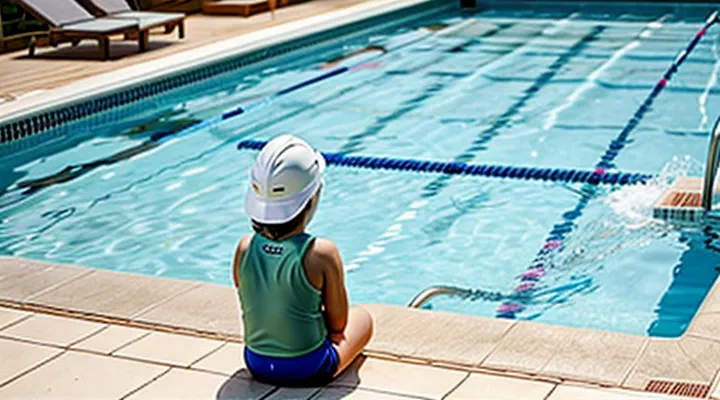
A swim cap creates a physical barrier between hair and the surrounding environment. The cap’s tight seal prevents hair from touching pool water, reducing the chance of lice attaching to strands. Additionally, most caps are made of non‑porous material that does not retain moisture, limiting the survival time of any lice that might land on the surface.
Key advantages of wearing a swim cap in this context:
- Isolates hair from potentially contaminated water and surfaces.
- Limits exposure to detached lice or nits that may be present on poolside equipment.
- Facilitates quick removal and cleaning; caps can be rinsed with clean water after use.
- Provides an additional layer of hygiene for swimmers who share communal facilities.
For optimal protection, use a cap that fits snugly, inspect it for damage before each swim, and wash it with soap and warm water after leaving the pool. Combining a well‑fitted swim cap with standard pool hygiene practices minimizes the likelihood of acquiring lice while swimming.
Post-Swim Hygiene
Hair Rinsing
Hair lice (Pediculus humanus capitis) require a dry environment to remain viable; chlorine and other disinfectants in pool water rapidly deactivate them. Consequently, the probability of acquiring lice directly from the water column is negligible. However, lice can be transferred on wet hair that contacts contaminated surfaces such as poolside benches, towels, or shared helmets.
Rinsing hair immediately after exiting the pool removes residual water, chlorine, and any debris that might conceal a louse. Thorough rinsing also reduces the chance that a live insect, dislodged from a carrier’s head, clings to wet strands and is later transferred to another person.
Effective post‑swim hair care:
- Use lukewarm water to wet the entire scalp and hair.
- Apply a mild, non‑conditioner shampoo; massage the scalp for at least 30 seconds.
- Rinse completely, ensuring no shampoo residue remains.
- Inspect the hair while still wet, separating sections to reveal any visible nits or adult lice.
- Dry hair with a clean towel; avoid sharing towels or headgear.
Consistent rinsing, combined with personal hygiene practices, minimizes the risk of lice transmission associated with public swimming facilities.
Hair Drying
Hair moisture after swimming creates an environment where head‑lice can cling to strands and transfer to other individuals. Chlorinated water reduces lice viability within minutes, but residual organisms may survive on damp hair until it dries.
When hair remains wet, combs, towels or shared drying devices can facilitate contact between contaminated and clean hair. Direct hand‑to‑hand contact also becomes more likely as individuals rub or pat dry their heads.
Effective measures focus on rapid drying and personal equipment:
- Use a personal towel; avoid sharing with others.
- Apply a high‑heat hair dryer for at least two minutes, ensuring the scalp reaches a temperature above 45 °C.
- Comb hair with a clean, fine‑toothed comb immediately after drying.
- Disinfect personal hair accessories with an alcohol‑based solution before reuse.
Implementing these steps minimizes the chance of acquiring lice from a swimming environment.
Addressing Common Concerns
Misconceptions About Lice and Water
Lice are ectoparasites that require a warm, dry environment to survive. Their bodies lack adaptations for swimming; legs are designed for gripping hair shafts, not for propulsion in water. Submersion in chlorinated or freshwater quickly disrupts the insect’s respiratory system, leading to death within minutes. Consequently, direct contact with pool water does not constitute a viable transmission route.
Common myths suggest that sharing a swimming pool can spread head lice. In reality, transmission occurs primarily through direct head‑to‑head contact or through personal items such as combs, hats, and towels that retain dry lice or viable eggs. Wet environments do not preserve viable nits; they become non‑viable after exposure to water for a short period.
Key points that clarify misunderstandings:
- Lice cannot swim; they drown when fully immersed.
- Chlorine and other disinfectants accelerate mortality.
- Eggs (nits) lose viability after a few minutes of water exposure.
- Transmission requires close, dry contact between heads or shared personal objects.
- Poolside incidents of lice are almost always linked to post‑swim activities, not the water itself.
Therefore, concerns about acquiring lice from swimming pool water are unfounded. Preventive measures should focus on minimizing head contact and avoiding the sharing of personal grooming items, rather than on the pool environment. «Lice cannot survive prolonged submersion», reinforcing that water is not a vector for these parasites.
What to Do if You Suspect Exposure
Suspected contact with head‑lice after using a public pool requires prompt verification and response.
Examine the scalp and hair promptly. Use a fine‑tooth comb on damp hair, starting at the neckline and moving toward the crown. Look for live insects, translucent nymphs, or brown‑colored eggs attached to hair shafts. If any are found, document the finding for later reference.
Take immediate remedial measures:
- Apply an over‑the‑counter pediculicide according to the product label; repeat the treatment after seven days to eliminate newly hatched nymphs.
- Wash all worn swimwear, towels, and personal items in hot water (minimum 60 °C) and dry on high heat.
- Vacuum the pool area and any upholstered furniture that may have been in contact with the head.
- Disinfect hair accessories, brushes, and combs by soaking in a solution of 1 % sodium hypochlorite for ten minutes, then rinse thoroughly.
Implement preventive actions to reduce future risk:
- Avoid sharing hats, caps, or hair‑care tools in communal settings.
- Shower immediately after swimming, removing any residual chlorine that may mask infestations.
- Conduct routine scalp inspections for all pool users, especially children, before and after each swim session.
Report the incident to pool management. Request verification of the facility’s sanitation protocols, including regular water filtration and surface cleaning. Maintain records of treatment dates and outcomes for potential medical follow‑up.